In recent years, solar motif lights have gained popularity in public spaces. As cities seek sustainable lighting solutions, questions arise. Are solar motif lights bright enough for public parks? This inquiry is essential for urban planners and designers.
Solar motif lights promise energy efficiency and vibrant aesthetics. They can create enchanting atmospheres in parks. However, concerns about brightness and visibility linger. Many parks require adequate illumination for safety and enjoyment.
Local governments and residents often debate the effectiveness of these lights. They should consider various factors, including solar efficiency and light output. Some users find that not all models meet their expectations. Bridging the gap between beauty and functionality remains a challenge. Investing in quality options is crucial for ensuring satisfaction. Ultimately, exploring real-world performance will clarify their role in public spaces.
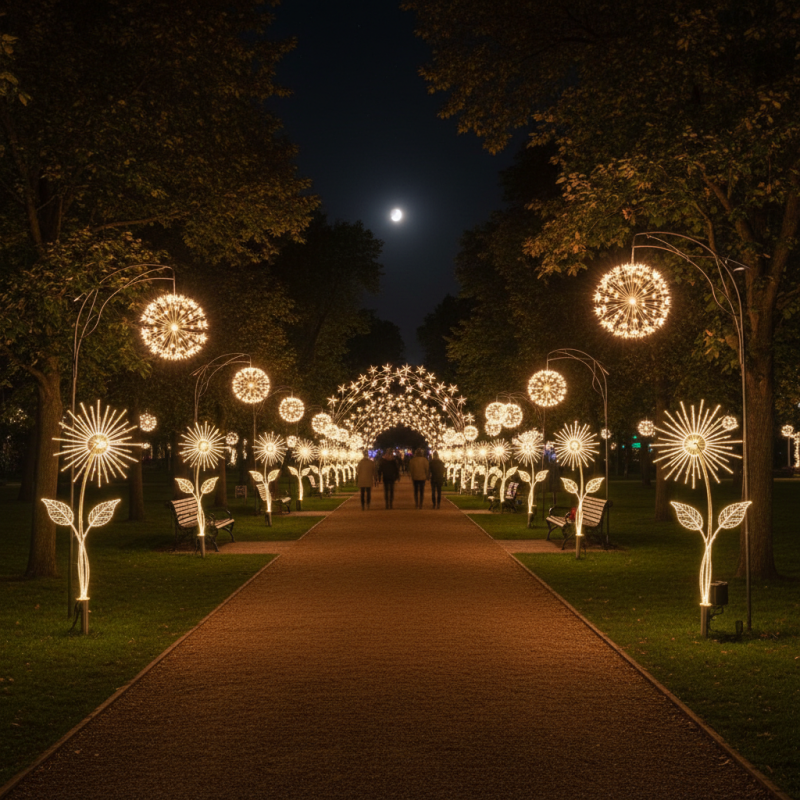
When considering solar motif lights for parks, evaluating their brightness is crucial. These lights are powered by solar energy, making them eco-friendly. They can enhance the park's aesthetics while providing illumination during the night. However, not all solar lights are equally bright, and this can affect their usability.
Tips for selecting solar motif lights: Check the lumens rating. A higher rating often means brighter lights, which is vital for safety in public areas. Also, consider the material. Durable materials can withstand harsh weather, ensuring longer use. Finding the right balance between brightness and aesthetics can be tricky.
Reflect on the placement of these lights. Positioning them too far apart may lead to dimly lit areas. Spacing them strategically ensures even illumination. While solar motif lights can create a delightful atmosphere, some units may not perform as expected during cloudy days. Regular maintenance and cleaning of the panels can improve their efficiency.
When evaluating the brightness levels of solar motif lights for parks in 2026, it's essential to consider several key factors. Industry reports indicate that brightness, measured in lumens, plays a crucial role in ensuring visibility and safety in outdoor areas. Most solar motif lights range between 50 to 300 lumens. However, for larger parks, options with higher lumen output may be necessary to illuminate paths effectively.
Research indicates that lights with over 150 lumens can sufficiently light walkways and decorative features. Despite this, many solar lights struggle with consistent performance due to battery limitations and sunlight exposure. Only 30% of solar lights maintain optimal brightness for over six hours, especially in shaded areas. This inconsistency prompts park planners to revisit lighting arrangements.
Additionally, energy efficiency remains a concern. While advancements in solar technology have improved output, not all products meet high-efficiency standards. The latest reports show that only 40% of solar motif lights achieve an efficiency rating above 75%. These numbers reflect the ongoing challenges in achieving reliable brightness standards for public spaces. Users must weigh performance against efficiency, as the best options may not always offer the brightest lights.
| Model | Brightness (Lumens) | Battery Capacity (mAh) | Light Duration (Hours) | Water Resistance Rating |
|---|---|---|---|---|
| Model A | 100 | 2000 | 10 | IP65 |
| Model B | 150 | 2500 | 12 | IP67 |
| Model C | 120 | 1800 | 8 | IP68 |
| Model D | 180 | 3000 | 15 | IP65 |
When comparing solar motif lights to traditional lighting options, the brightness factor is a significant consideration. Solar lights generally use LED technology, which emits a sufficient amount of light for pathways and gardens. However, the intensity can vary. In parks, where open spaces are common, brightness needs to be evaluated carefully.
Many users report that solar lights can be bright enough for decorative purposes but might fall short for safety or security needs. In areas with heavy foot traffic, brighter lighting is crucial. Traditional lighting options, like high-intensity discharge lamps, often provide a more consistent and powerful light output. Yet, these come at a higher energy cost.
Solar motif lights offer sustainability and lower operational costs. Still, the initial investment and performance depend on solar exposure and battery efficiency. Users must assess their park's unique environment. A thoughtful evaluation will ensure the lighting is adequate for both aesthetics and safety. It's essential to find the right balance to create an inviting atmosphere.
When considering solar motif lights for parks, durability and weather resistance are crucial factors. These lights should withstand varying conditions. Parks can experience heavy rainfall, snow, and strong winds. Selecting lights made from high-quality, weather-resistant materials is essential. UV-resistant plastics and corrosion-proof metals typically offer better protection.
Testing is important. Even the best materials can fail under extreme conditions. It’s wise to observe user reviews for insights into real-world performance. How do they hold up during storms? Are cracks or fading apparent after prolonged exposure to sun? These details can indicate the reliability of a product.
An additional concern is battery life. Cheaper solar lights may not endure cold temperatures well. In those cases, users might find them dim or inoperable. It’s vital to ensure that solar motif lights have long-lasting batteries suited to the local climate. An energy-efficient design can help maximize function even during tough conditions.
User feedback on solar motif lights in parks reveals mixed experiences. Many users appreciate the aesthetic appeal these lights bring to green spaces. They create a vibrant atmosphere, especially during evening events or gatherings. However, brightness often becomes a concern. Some users note that the lights might not be powerful enough for larger areas, leading to dim visibility in certain corners of the park.
Another aspect highlighted by users is the durability of these lights. While some have reported consistent performance over several seasons, others experienced issues with battery life. Weather conditions, such as heavy rain or snow, seem to affect performance. Users suggest a need for better designs that can withstand these elements more effectively. Some parks may require additional lighting solutions to ensure safety during darker hours. Though solar motif lights contribute to the charm of parks, their reliability remains a topic for discussion.
: Durability and weather resistance are crucial. They need to withstand heavy rain, snow, and strong winds.
High-quality, weather-resistant materials like UV-resistant plastics and corrosion-proof metals offer better protection.
User reviews are important. They reveal how lights hold up during storms or if they show cracks over time.
Cheaper options may not endure cold temperatures well, leading to dim or inoperable lights.
Many users find the brightness inadequate for larger areas, resulting in dim visibility in parts of the park.
Heavy rain or snow can impact performance. Some users report decreased battery life during tough weather.
Some parks may require additional lighting solutions for safety. Solar lights might not be reliable enough alone.
Users enjoy the aesthetic appeal they bring to parks, enhancing the atmosphere during evening events.
Users advocate for better designs to withstand harsh weather conditions more effectively.
Their reliability is mixed, with some users reporting consistent performance and others facing issues.
The article titled "2026 Best Solar Motif Lights: Are They Bright Enough for Parks?" evaluates the effectiveness of solar motif lights specifically designed for public park use. It examines the brightness levels of these lights and considers whether they meet the needs of open spaces. The comparison between solar motif lights and traditional lighting options highlights the advantages and limitations of each, particularly in terms of illumination and aesthetics.
Additionally, the article discusses the durability and weather resistance of solar motif lights, which are crucial for outdoor installation. User feedback and experiences provide insight into the practical use of these lights in parks, addressing the question: "Are solar motif lights bright enough for public parks?" Overall, the findings suggest a comprehensive overview of solar motif lights, offering valuable guidance for parks considering these lighting solutions.

WoodLit Light