What Are the 2026 Top City Street Light Trends?

Time:2026-09-23 Author:Liam
0%

City street lighting is entering a more measured phase in 2026. Municipalities are moving beyond simple LED replacement projects. They are examining energy use, public comfort, maintenance data, and visual identity together. The U.S. Department of Energy’s 2024 Solid-State Lighting R&D Opportunities report highlights continuing progress in LED efficacy, controls, and connected lighting systems. These developments support adaptive dimming, remote fault detection, and more precise light distribution. However, technology alone does not guarantee better streets.

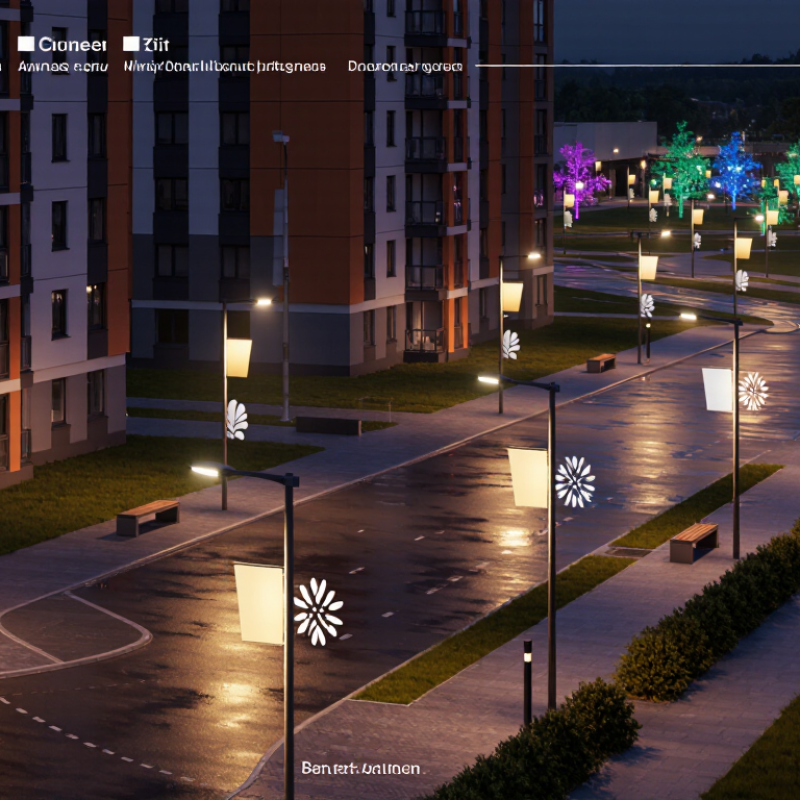
What are the latest trends in city street light decorations? Current projects increasingly combine decorative design with practical performance. Slim poles, programmable color temperatures, shielded luminaires, and seasonal motifs are appearing in commercial streets, parks, and transit areas. The International Energy Agency’s Energy Efficiency 2023 report reinforces the importance of digital controls and system-level efficiency. Meanwhile, the World Bank’s energy-efficient street lighting guidance emphasizes lifecycle costs, maintenance planning, and reliable procurement. These findings matter when a decorative fixture must survive rain, dust, vibration, and constant nighttime operation.

Details shape public experience. Warm light can make a plaza feel welcoming. Poor shielding can place harsh glare across apartment windows. Wet pavement may amplify reflections. A brighter street is not automatically safer. This remains an uncomfortable point for some project proposals. The Commission Internationale de l’Éclairage recommends performance-based lighting design, yet local streets still require human judgment and on-site testing. In 2026, the strongest city street light strategies will balance beauty, visibility, energy savings, accessibility, and repairability. The trend is not decoration alone. It is responsible urban atmosphere.
What Are the 2026 Top City Street Light Trends?

What Defines the Top City Street Light Trends in 2026?

In 2026, top city street light trends will be defined by how well lighting serves people, not just roads. Adaptive fixtures can lower brightness when streets are empty and respond when pedestrians or cyclists appear. This reduces wasted energy while preserving visibility. Warm, low-glare light is also gaining attention near homes, parks, and historic areas. It feels calmer. That matters after dark.

Reliable systems will combine efficient LEDs, occupancy sensors, remote monitoring, and backup controls. City engineers can identify failing fixtures before residents report dark sidewalks. In practice, maintenance teams need clear data, simple dashboards, and replaceable components. A technically advanced system is not useful when local workers cannot repair it. Weather resistance will remain essential, especially in coastal districts and areas with heavy snow. Small details count, such as sealed connectors and stable mounting brackets.

Public safety will shape design choices, but brighter is not always safer. Excessive light can create glare, disturb wildlife, and make shadows harder to read. Cities should test lighting with older adults, wheelchair users, delivery workers, and nighttime commuters. Their experiences may expose problems that computer models miss. No city gets this balance right every time. Pilot projects can also disappoint when sensor settings react too slowly or dim an important crossing. Transparent evaluations, accessible controls, and published performance data will help officials improve rather than defend every early decision.

The chart presents a comparative 2026 planning-priority index from 0 to 100. It synthesizes established street-lighting requirements and guidance covering energy efficiency, adaptive controls, connected infrastructure, visual quality, maintenance, and environmental impact. The index is not company data or a market-share forecast.

Reference framework: U.S. Department of Energy Solid-State Lighting resources, IES RP-8-22, NEMA ANSI C136.41, Zhaga Book 18, and CIE 150.

How Smart Controls Are Transforming Urban Street Lighting

What Are the 2026 Top City Street Light Trends?

Smart controls are transforming urban street lighting from fixed schedules into responsive infrastructure. In 2026, cities are adopting networked LED fixtures, remote dimming, motion detection, and traffic-aware brightness. The International Energy Agency reports that lighting consumes about 15% of global electricity, making efficiency a major urban priority. The U.S. Department of Energy has also found that LED systems combined with controls can deliver substantial energy savings, often exceeding 50% compared with older technologies.

The practical change happens after midnight. A quiet road may dim to 30%, then brighten when a cyclist, bus, or pedestrian approaches. Operators can monitor faults remotely instead of inspecting every pole. This reduces maintenance trips and improves response times. However, sensors can miss movement in rain, glare, or crowded streets. That matters. Poor calibration may create dark patches or unnecessary brightness. Cities should test adaptive settings block by block, record lighting complaints, and protect collected data through strict access controls. Interoperability is another 2026 priority, supported by open communication standards such as TALQ. The system should remain usable if one supplier changes its platform. That is still overlooked. Reports from the U.S. Department of Energy and the International Energy Agency support the efficiency case, but real performance depends on installation quality, local traffic patterns, and continuous review.

Why Energy Efficiency Is Driving New Street Light Designs

What Are the 2026 Top City Street Light Trends?

Energy efficiency is shaping nearly every new city street light design in 2026. High-efficiency LED systems use less electricity while producing clearer light. Their compact housings also reduce material use and simplify maintenance. During street-light audits, engineers often find that poor aiming wastes more energy than expected. Light spilling onto empty sidewalks or building walls serves no useful purpose.

Adaptive lighting is becoming more practical. Sensors can detect traffic, cyclists, and pedestrians, then adjust brightness within seconds. A quiet road may need less light at 2 a.m. A busy crossing needs more. This approach reduces overnight consumption without leaving streets completely dark. It also supports safer, more comfortable public spaces. Small changes matter.

Solar-assisted poles and remote monitoring are gaining attention, especially where trenching is expensive. Remote systems can report power faults, temperature changes, and lamp failures before residents notice them. However, connected equipment adds maintenance needs and cybersecurity concerns. Efficiency is not automatic. A poorly calibrated sensor may brighten an empty road repeatedly. Battery performance can also weaken during long cloudy periods.

City planners are therefore combining energy data with on-site observation. They compare electricity use, nighttime visibility, glare complaints, and repair records. The numbers help, but they do not tell everything. A design that looks efficient in a spreadsheet may feel harsh beside apartment windows. Human judgment still belongs in the lighting plan.

What Are the 2026 Top City Street Light Trends? - Why Energy Efficiency Is Driving New Street Light Designs

Trend Typical 2026 Design Direction Reference Value Energy or Operational Benefit Key Design Consideration Evidence Source
High-efficiency LED luminaires Replacement of high-pressure sodium, metal-halide, and mercury-vapor fixtures with high-efficacy LED optical systems. 100–180 lm/W
Typical LED efficacy range
LED conversions commonly reduce street-lighting electricity use by about 50% or more, depending on the existing lamp, optical distribution, and operating schedule. Specify maintained illuminance rather than simply replacing wattage; include lumen depreciation and thermal management in calculations. U.S. Department of Energy, LED roadway and street-lighting guidance
Adaptive dimming Scheduled or sensor-based reduction of light output during late-night periods with lower traffic and pedestrian activity. 30–50%
Common additional energy-saving target
Lower output during approved periods can reduce energy consumption while retaining required minimum lighting levels. Use traffic data, pedestrian activity, road classification, and safety requirements to define dimming profiles. International Commission on Illumination guidance on road-lighting classes and adaptive lighting
Networked lighting controls Remote monitoring, fault alerts, scheduling, energy measurement, and group-level control through a secure communications network. 10–20%
Potential control-related savings before dimming optimization
Reduces unnecessary operating hours and shortens maintenance response time by identifying outages and abnormal power use. Require open interfaces, cybersecurity controls, data ownership terms, and manual override capability. U.S. Department of Energy guidance on connected outdoor lighting systems
Lower correlated color temperature Greater use of warm-white light, especially in residential streets, parks, ecological zones, and areas with sky-glow restrictions. 2,200–3,000 K
Common warm-white range
Can reduce short-wavelength emissions and support better control of glare and nighttime environmental impact when paired with proper shielding. Color temperature alone does not control light pollution; use full cut-off optics, appropriate intensity, and precise aiming. International Commission on Illumination publications on outdoor lighting and environmental impact
Full cut-off and precision optics Optical systems that place light only on the roadway, sidewalk, cycle lane, or other intended area. 0%
Intentional uplight target
Reduces wasted light, glare, spill light, and the need for excessive lumen output. Verify photometric files, setback geometry, mounting height, spacing, and uniformity at the design stage. IES outdoor-lighting recommendations and dark-sky lighting principles
Solar-powered and hybrid street lights Standalone photovoltaic systems or hybrid designs for remote roads, parks, pathways, and locations where grid extension is expensive. 2–5 nights
Typical battery autonomy target
Eliminates or reduces grid electricity use and trenching requirements at suitable sites. Size the photovoltaic array and battery for local solar irradiation, winter conditions, temperature, shading, and required lighting duration. International Electrotechnical Commission standards for photovoltaic systems and secondary batteries
Long-life modular construction Replaceable LED boards, drivers, surge-protection modules, and optical components instead of sealed, non-serviceable assemblies. 50,000–100,000 hours
Rated LED lifetime range
Extends service life, reduces replacement waste, and lowers the labor and material impacts of full-fixture replacement. Check driver life, ambient-temperature limits, surge immunity, lumen-maintenance data, and availability of replacement parts. U.S. Department of Energy solid-state lighting performance guidance
Life-cycle carbon and circularity Procurement based on energy use, repairability, recycled content, material declarations, and end-of-life recovery. 10–20 years
Common municipal asset-planning horizon
Encourages lower total cost of ownership and reduces material waste over the complete asset life. Compare embodied carbon and operating energy; require documented repair, recycling, and maintenance pathways. European Union ecodesign, energy-labeling, and waste-electrical-equipment policy framework
Resilient and climate-ready design Fixtures and poles designed for heat, flooding, wind, salt exposure, voltage disturbances, and extreme weather events. IP66
Common enclosure protection target
Reduces premature failures, emergency maintenance, and energy losses caused by water or environmental damage. Use local wind, temperature, corrosion, flood, and electrical data when selecting the enclosure and mounting system. International Electrotechnical Commission enclosure-protection classification

Note: Reference values are typical planning ranges rather than universal requirements. Actual performance depends on roadway classification, existing equipment, local regulations, photometric design, operating hours, climate, and maintenance practices.

How Cities Are Improving Safety, Comfort, and Accessibility

What Are the 2026 Top City Street Light Trends?

Cities are treating street lighting as public safety infrastructure, not decoration. In 2026, adaptive LED systems will adjust brightness after detecting traffic, cyclists, and pedestrians. This can improve visibility while reducing unnecessary energy use. Shielded fixtures will direct light onto roads and sidewalks instead of windows or the night sky. Warmer color temperatures are also gaining attention. They can create a calmer atmosphere near homes, parks, and hospitals. Still, brighter is not always safer. Excessive glare may hide faces, signs, and uneven pavement.

Comfort and accessibility are becoming equal priorities. Well-lit crossings help drivers notice people using wheelchairs, walking aids, or white canes. Continuous lighting along sidewalks can reduce dark gaps between poles. Cities are also testing lower mounting heights in selected areas, especially near transit stops. Smart controls can report outages faster, but technology alone cannot solve poor planning. A sensor may miss a slow-moving pedestrian. Maintenance remains essential.

Tips: Test lighting at eye level, not only from a vehicle. Inspect crossings after rain, when reflections can increase glare. Ask older residents and disabled users where they feel unsafe. Measure brightness, uniformity, energy use, and complaints together. Leave room for adjustment. A plan that looks perfect on paper may feel uncomfortable at street level. Regular nighttime audits can reveal problems that daytime inspections miss.

What Materials and Maintenance Practices Will Shape Future Systems

In 2026, street-light systems will depend more on material durability than appearance. Recycled aluminum housings can reduce weight and improve heat transfer. Corrosion-resistant coatings matter in coastal districts. Polycarbonate lenses also need careful testing against ultraviolet exposure and impact.

The U.S. Department of Energy’s 2023 Solid-State Lighting R&D Opportunities report identifies over 200 lumens per watt as a major development target. Higher efficacy can reduce electricity use, but thermal management remains essential. Poor heat removal accelerates lumen depreciation and shortens component life. ANSI/IES LM-80 and TM-21 methods help engineers evaluate LED lifetime data. However, laboratory results do not fully represent polluted, humid streets. That gap deserves more attention.

Maintenance will shift toward modular replacement, remote fault alerts, and scheduled cleaning. The International Energy Agency reports that efficient lighting can reduce electricity consumption substantially compared with older technologies. Sensors can detect outages, voltage changes, and unusual operating temperatures. Data is useful, but inaccurate sensors create unnecessary service visits. Cities should keep manual inspections.

Tips: Specify sealed connectors, replaceable drivers, and drainage paths. Record dirt levels before cleaning. Use site-specific maintenance cycles, not generic calendars. Review five years of failure data before selecting new materials. A cheaper fixture may become expensive after repeated lift-truck visits. Test one neighborhood first. Then adjust the standard.

FAQS

What defines the top city street light trends in 2026?

People-centered lighting defines them. Systems must improve visibility, comfort, energy use, and maintenance.

How does adaptive street lighting save energy?

Sensors detect pedestrians, cyclists, and vehicles. Fixtures can dim empty roads and brighten active crossings within seconds.

Is brighter lighting always safer?

No. Excessive brightness can create glare, disturb wildlife, and hide important shadows.

Why are warm, low-glare lights becoming more popular?

They feel calmer near homes, parks, and historic areas. They can also reduce discomfort after dark.

Which technologies support efficient street lighting?

Efficient LEDs, occupancy sensors, remote monitoring, and backup controls work together. Poor calibration can still waste electricity.

What should cities check before installing adaptive lights?

They should test sensor timing, brightness levels, glare, and crossing visibility. An empty road should not brighten repeatedly.

How can maintenance teams manage connected lighting systems?

Clear dashboards should show failures, temperatures, and power faults. Replaceable parts and sealed connectors also matter.

Can solar-assisted street lights work everywhere?

They help where trenching is expensive. Long cloudy periods may weaken battery performance, so backup planning remains necessary.

Who should test new city lighting?

Older adults, wheelchair users, delivery workers, cyclists, and nighttime commuters should test real streets.

How should cities judge a lighting project?

They should compare energy use, visibility, glare complaints, and repair records. Numbers help, but people notice problems spreadsheets miss.

Conclusion

In 2026, the top city street light trends will focus on smarter, cleaner, and more people-centered urban infrastructure. Connected lighting systems will allow cities to adjust brightness, schedules, and performance based on traffic, weather, and pedestrian activity. These smart controls can reduce unnecessary energy use while helping maintenance teams identify faults earlier. At the same time, new designs will increasingly use efficient light sources, adaptive dimming, renewable power options, and recyclable materials to lower operating costs and environmental impact.

Safety, comfort, and accessibility will also guide future street lighting decisions. Well-distributed illumination can improve visibility at intersections, sidewalks, bike paths, and public spaces without creating excessive glare or light pollution. When considering what are the latest trends in city street light decorations, cities are likely to favor tasteful, energy-conscious decorative elements that support local identity while preserving nighttime visibility. Durable materials, modular components, remote monitoring, and preventive maintenance will help lighting networks remain reliable, flexible, and easier to upgrade as urban needs change.

Liam

Liam

Liam is a dedicated marketing professional with a profound expertise in the industry, where he excels at highlighting the unique advantages of our core products. With a keen understanding of market trends and consumer needs, Liam frequently updates our company’s professional blog, providing......