How to Determine the Number of DMX Balls per Power Supply?

Time:2026-05-05 Author:Isabella
0%

Determining how many DMX balls can be connected to one power supply is a critical aspect for lighting professionals. John Smith, a recognized expert in stage lighting, emphasizes, "Understanding load capacity helps maximize efficiency."

The number of DMX balls you can connect depends on the power supply's output. Each DMX ball has specific voltage and current requirements. If you exceed the limit, it could lead to system failure. A thorough understanding of these factors prevents potential risks.

Some may assume they can blindly connect several units. However, this approach can backfire. An overloaded power supply often results in dim lights or complete outages. Experts advise careful calculations and, if in doubt, consulting a professional. Always prioritize safety and performance over convenience.
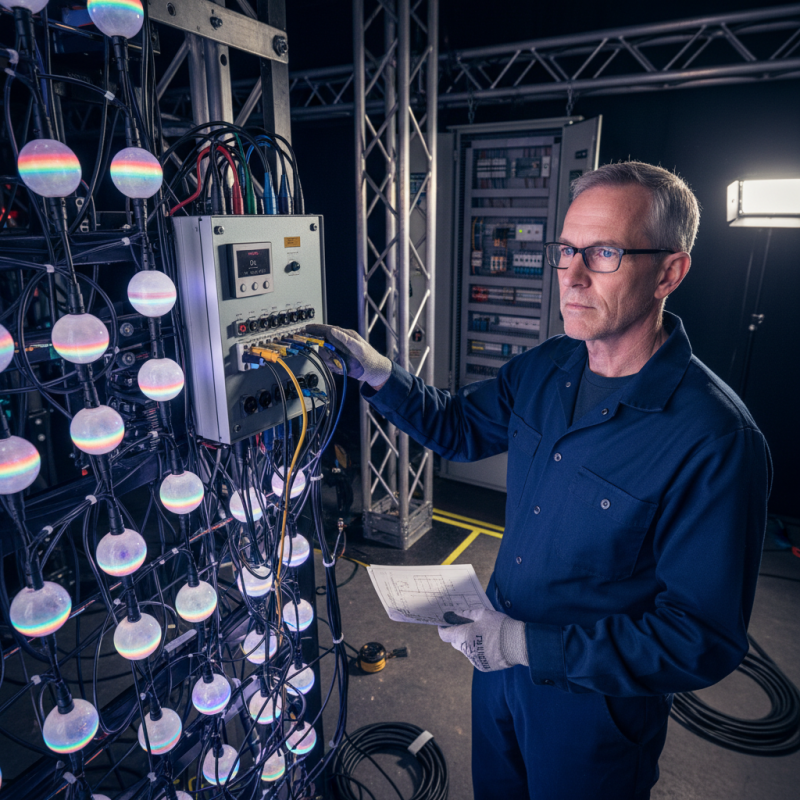
How to Determine the Number of DMX Balls per Power Supply?

Understanding DMX Ball Specifications and Power Requirements

When considering how many DMX balls can connect to a single power supply, knowledge of specifications is vital. DMX balls are popular in lighting setups, but they have varying power needs. Understanding the wattage of each unit and the total output of the power supply is essential. It’s not just about the number of devices; you must factor in the total power consumption too.

Many DMX balls run on different voltages. Common values include 12V or 24V. This affects how many can operate simultaneously. If a DMX ball uses 10 watts, and your power supply outputs 100 watts, you can potentially connect up to ten units. However, this calculation assumes optimal conditions. Voltage drops and other variables can alter your actual load capacity.

It’s crucial to keep a safety margin. Overloading a power supply can lead to failures or damage. Planning accurately requires a balance between ambition and practicality. You might envision an expansive setup, but practical limitations exist. The specifications of each lighting unit and the power supply must guide your decisions. This method will help ensure successful setups while preventing avoidable mishaps.

Calculating Power Consumption of Individual DMX Balls

When working with DMX balls, understanding their power consumption is key. Each DMX ball has specific wattage, typically ranging from 10W to 20W. Knowing this range helps in calculating how many balls your power supply can support. If you have a 200W power supply, you can safely use around 10 DMX balls that consume 20W each.

To perform the calculation, add the wattage of all DMX balls together. Make sure to leave some buffer. It’s wise to work at about 80% of your power supply’s capacity to avoid overload. For example, if you plan to use 8 DMX balls that consume 15W each, the total would be 120W. Staying under the 160W mark keeps your setup safe and functional.

Sometimes, unexpected issues arise. Variations in actual wattage can occur with different DMX balls. It's important to monitor your setup, especially during long events. If you notice dimming lights, you may need to reevaluate your power supply and consumption calculations. Adjusting to the specifics of each installation will improve reliability and performance.

Determining Maximum Load on Power Supply Units

When determining how many DMX balls to connect to a power supply, understanding the maximum load is crucial. Power supply units (PSUs) have specified limits measured in watts. Exceeding these limits can lead to failures or safety hazards. Industry standards indicate that a PSU typically handles a load of around 120 to 500 watts, depending on its design and intended use. This capacity influences the total number of DMX balls you can operate safely.

To calculate the total load, sum the wattage of each DMX ball. For instance, if each ball consumes 10 watts, a supply rated for 240 watts can power up to 24 balls. However, it's wise to operate at about 80% of the PSU's capacity. This reduces the strain on the unit and extends its lifespan. Hence, for a 240-watt PSU, connecting 19 balls ensures reliability while accommodating fluctuations.

In practice, many professionals encounter discrepancies in load calculations. Not all devices are created equal, and actual power consumption can vary. Some balls may draw more during peak usage. Regular monitoring and testing are essential. They can reveal if your system operates within safe parameters. This iterative approach fosters a better understanding of your equipment limits and prevents potential pitfalls.

Common DMX Control Protocols and Their Capacity Limits

When determining the number of DMX balls per power supply, understanding DMX control protocols is crucial. Each protocol has specific capacity limits, greatly influencing equipment choices. According to industry standards, DMX512 is the most widely used protocol. It supports up to 512 channels per universe. Each DMX ball typically uses one channel in this setup.

However, it’s essential to consider the power supply capacity. A standard DMX power supply handles around 10 to 20 DMX devices efficiently. Exceeding this limit leads to unreliable operations and potential damage. Experts note that during peak usage, voltage drops can occur, affecting the performance of connected devices. This highlights the importance of testing setups to validate their reliability before live events.

Research also indicates that some advanced protocols, like Art-Net, allow for increased device counts. Art-Net can manage multiple DMX universes over Ethernet. This expands capacity significantly, but users must ensure their hardware can handle the increased data rate. Many setups fail due to mistaking bandwidth for capacity. Proper planning and understanding of each protocol’s limits can prevent costly mistakes in large installations.

Best Practices for Wiring and Distributing DMX Power Supply

When planning your DMX lighting setup, distributing power effectively is crucial. A standard DMX power supply can handle approximately 32 channels, according to industry reports. However, the actual number of DMX balls you can connect depends on various factors, including cable length and the total current draw of each device.

Wiring practices can greatly influence your setup’s reliability. Properly gauging wire size is essential. For example, a 20-gauge wire is suitable for shorter runs, while a thicker 16-gauge is recommended for longer distances. This ensures minimal voltage drop and optimal performance. Experts suggest keeping cable lengths under 200 feet to avoid issues. Also, following the daisy-chain wiring method can help. Ensure that each DMX ball draws a reasonable amount of power to prevent overloading the supply.

It's important to be mindful of potential pitfalls. Many setups fail due to unnoticed power drain or poor connections. Regularly inspecting connections and using a power meter can mitigate risks. Allocating DMX loads thoughtfully can safeguard equipment longevity. These practices can enhance reliability while avoiding costly mistakes in large installations.

DMX Balls Per Power Supply Distribution

FAQS

: What are the common voltage requirements for DMX balls?

: DMX balls commonly run on either 12V or 24V. This can impact how many can connect.

How do you calculate the number of DMX balls for a power supply?

First, determine the wattage of each ball and the PSU's total output. Then, divide.

Why is it important to consider safety margins?

Overloading a power supply can cause failures. A safety margin helps prevent damage to equipment.

What is a good practice for using power supply units (PSUs)?

Operating a PSU at around 80% of its capacity is advisable. This helps ensure its longevity.

Why might actual power consumption differ from calculations?

Some DMX balls may draw more power during peak usage. Monitor for accurate assessments.

Can I connect more DMX balls than the recommended amount?

While it’s tempting, it risks damage and affects performance. Stick to specifications.

What if I encounter discrepancies in power calculations?

Regular testing can reveal issues. Continuous adjustments can enhance understanding of equipment limits.

Is there a standard load limit for power supplies?

Typically, PSUs can handle between 120 to 500 watts. Always check the unit's specifications.

How can planning affect my lighting setup?

Balancing ambition with practicality is key. Successful setups depend on realistic expectations and limits.

What happens if I ignore power consumption variations?

Ignoring these can lead to system failures. Regular monitoring is vital to maintain safe operations.

Conclusion

Determining how many DMX balls can be connected to one power supply requires a thorough understanding of DMX ball specifications and their power requirements. Each DMX ball has a specific power consumption, which must be calculated to assess how many units can be wired to a single power supply without exceeding its maximum load.

It is crucial to consider the capacity limits of the common DMX control protocols as they may impact the overall performance when connecting multiple DMX balls. Additionally, best practices for wiring and distributing the power supply can help ensure consistent and reliable operation. By carefully calculating power consumption and adhering to guidelines for maximum load, you can safely determine how many DMX balls can be connected to one power supply, allowing for effective setup and operation of your DMX lighting system.

Isabella

Isabella

Isabella is a dedicated marketing professional with a sharp focus on driving brand growth and engagement through strategic content creation. With an extensive background in digital marketing, she combines her passion for storytelling with her keen understanding of industry trends to deliver......