How to Choose Bird Friendly Eco Friendly LED Lights?

Time:2026-10-18 Author:Mason
0%

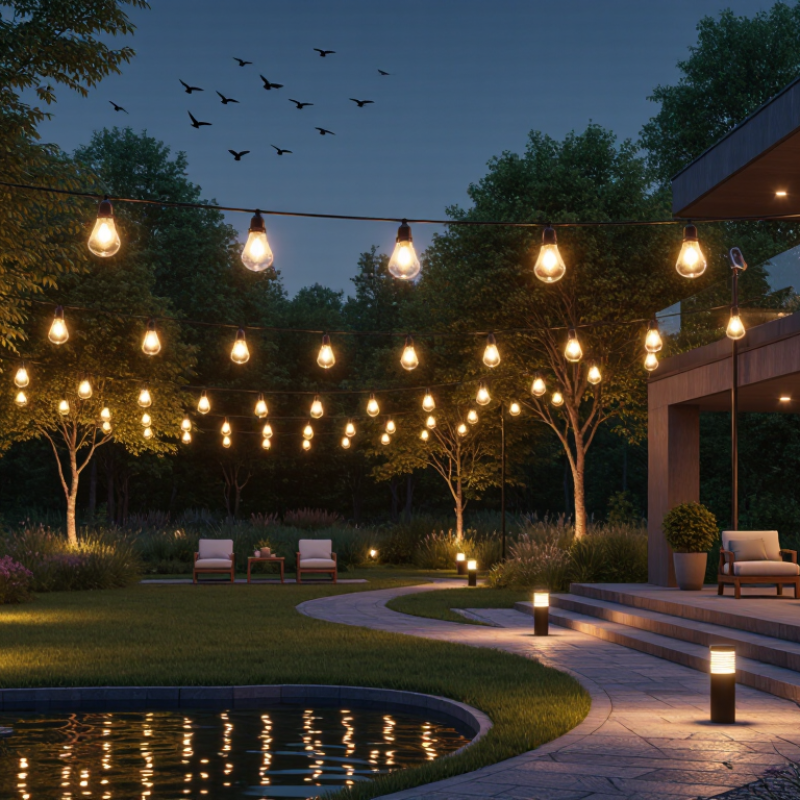
Choosing decorative lighting for a garden, balcony, or hospitality space requires more than color and brightness. The key question is: Which LED decorative lights are bird-friendly and eco-friendly? The answer depends on spectrum, intensity, timing, placement, and energy use. Birds can mistake bright lamps for natural signals, especially during migration. A glowing string across a dark yard may look beautiful to people, yet create confusion for wildlife.

Dr. Travis Longcore, an urban ecologist and recognized light-pollution researcher, has stated, “Artificial light at night changes habitat conditions for wildlife.” His warning supports a practical approach: select warm LEDs, preferably under 3,000 kelvin, and avoid strong blue-rich light. Use shielded fixtures. Aim light downward. Keep tree canopies and open flight paths darker. Timers, motion sensors, and dimmers can reduce unnecessary exposure and electricity consumption.

Small changes matter.

From my experience reviewing outdoor lighting plans, amber or warm-white LEDs usually feel softer and create fewer harsh reflections on glass, water, and leaves. However, “bird-friendly” is not an automatic label. A low-energy bulb can still disturb birds if it operates all night or shines upward. Product claims also need careful checking. Look for published color temperature, lumen output, controls, durability, and responsible recycling information. No option is perfect. Weather, migration routes, building surfaces, and local bird behavior can change the result. This guide examines those details, helping readers choose attractive LED decorations with less ecological pressure and more thoughtful performance.
How to Choose Bird Friendly Eco Friendly LED Lights?

Understanding How LED Lighting Affects Birds and Wildlife

How to Choose Bird Friendly Eco Friendly LED Lights?

LED lighting can affect birds and wildlife through brightness, color, timing, and direction. Blue-rich light scatters widely and may disturb nocturnal insects, bats, and migrating birds. Birds can also lose natural darkness near nesting areas, feeding grounds, and coastal routes. The impact varies by habitat, season, and installation height.

Choose a warm LED color temperature, preferably around 2200K to 2700K. Keep it warm. Use fully shielded fixtures that direct light downward, not into trees or open skies. Lower brightness is often better than adding more fixtures. Timers, dimmers, and motion sensors can reduce exposure during quiet hours. Avoid constant lighting near wetlands, hedgerows, and known bird corridors.

Eco-friendly does not mean harmless. LEDs use less electricity, but poor placement can still create light pollution. Check the actual lumen output, not only the wattage. Ask local wildlife authorities or qualified lighting professionals about seasonal restrictions. A small amber light may protect wildlife better than a powerful “green” light. I would not treat one color temperature as a universal solution. Some birds respond differently, and evidence remains incomplete for several species. That uncertainty deserves attention. Choose repairable fixtures, recycle them through approved collection systems, and review the site after installation. Look for glare on leaves, windows, or nearby water. Adjust the light when wildlife behavior changes.

Identifying Bird-Friendly Features in Eco-Friendly LED Lights

When choosing eco-friendly LED lights near gardens, wetlands, or migration routes, inspect their bird-friendly features carefully. Birds can become disoriented by bright blue-rich light at night. A warmer color temperature, often between 2200K and 3000K, may reduce this pressure. However, warmer light is not automatically harmless. Check the complete spectrum, not only the box label.

In practical outdoor lighting reviews, full shielding makes a noticeable difference. The fixture should direct light downward, with little glow visible above the mounting point. Adjustable dimming, motion sensors, and scheduled shutoff periods can reduce unnecessary night exposure. Choose LEDs with documented low-flicker performance and reliable photometric data. A high efficiency rating helps reduce energy use, but it does not prove bird safety. Observe the site after installation. Reflected light from pale walls or water may still create a bright nighttime zone.

Tips: Compare the spectrum, shielding, brightness, and controls together. Ask for independent test reports when available. Start with the lowest useful brightness. Watch for bird activity during migration periods, then adjust the lighting if needed. I have found that real locations often behave differently from design drawings. That uncertainty matters. A fixture can appear gentle in a showroom, yet seem harsh beside dark trees.arsuaq

Comparing Color Temperature, Brightness, and Light Distribution

How to Choose Bird Friendly Eco Friendly LED Lights?

Color temperature is a major concern for bird-friendly outdoor lighting. Choose warm LEDs around 2200K to 3000K, rather than cool white light above 4000K. Lower blue content can reduce disruption to nocturnal movement and feeding patterns. Warm light works better. However, color temperature alone cannot guarantee safe lighting. A poorly aimed warm lamp may still shine into trees, nests, or dark corridors.

Brightness should match the task, not exceed it. Check lumens instead of relying only on wattage. A small pathway may need 100 to 300 lumens, while a larger entrance may require more. Keep it dim. Use timers, motion controls, or lower-output settings to shorten exposure. In practice, people often install lights that feel reassuring but are unnecessarily bright. That choice wastes energy and can make nearby habitats less suitable.

Light distribution deserves equal attention. Select fully shielded fixtures that direct light downward, with minimal upward glow and side spill. Aim the beam toward the ground, not across a garden or pond. A narrow beam can illuminate steps without flooding surrounding vegetation. Walk outside after installation and inspect the area from a bird’s-eye perspective, if possible. Darker tree canopies are a useful sign. Still, this check is imperfect. Reflections from pale walls, wet paths, and windows may extend the lit area farther than expected. Adjust the angle, reduce output, and observe seasonal bird activity before keeping the setting permanent.

Choosing Energy-Efficient Lights for Different Outdoor Locations

Choosing energy-efficient LED lights outdoors requires more than checking wattage. The location, timing, and light direction matter for birds, insects, and nearby residents.

For garden paths, choose warm LEDs around 2200K to 3000K. Their amber tone creates visibility without producing excessive blue-rich light. Use low fixtures with covered lenses, and aim them toward the ground. Keep brightness modest. A path should guide footsteps, not imitate daylight.

Patios need comfortable, shielded lighting. Dimmable fixtures can provide soft light during dinner and lower output later. Timers prevent unnecessary overnight use. For ponds and wetlands, avoid direct illumination whenever possible. Reflections can disturb resting birds and nocturnal wildlife. Darkness matters there.

Parking areas and building entrances require careful balance. Motion sensors can reduce energy use, but sudden brightness may startle animals. Select gradual activation when available. For taller buildings, use downward-facing lights and turn them off during peak migration periods, following local wildlife guidance. Warm color temperatures help, but they do not solve every problem.

I once planned a garden with too many small lights. It looked attractive, yet it made the area feel exposed. Fewer fixtures worked better. Efficiency is not only about lumens per watt; it also involves useful light, operating hours, maintenance, and glare control. Check regional dark-sky recommendations and electrical requirements before installation. No fixture is perfect. Regularly inspect its direction and brightness, because growing plants can redirect light into the night sky.

How to Choose Bird Friendly Eco Friendly LED Lights? - Choosing Energy-Efficient Lights for Different Outdoor Locations

Outdoor Location Recommended Light Color Suggested Brightness Energy-Efficient Specification Weather Protection Bird-Friendly Design Controls and Operating Schedule
Garden Paths and Walkways 2,200–2,700 K
Warm amber to warm white
100–300 lumens per fixture LED efficacy of at least 80 lumens per watt; use low-wattage fixtures and avoid over-lighting. IP44 minimum for sheltered areas; IP65 or higher for fully exposed fixtures. Fully shielded downward optics, low glare, and no upward light. Keep beams directed at the walking surface. Use timers, photocells, or motion sensors. Turn lights off after the period of pedestrian activity.
Driveways and Vehicle Access Areas 2,200–3,000 K
Warm or neutral-warm white
300–800 lumens per fixture Select LEDs with high optical efficiency and dimming capability; use several low-output fixtures instead of one intense light. IP65 or higher where exposed to rain, dust, and vehicle spray. Use full cut-off housings and shielded lenses to reduce skyglow and prevent direct glare toward trees and habitat. Motion activation with a short time-out, typically 1–5 minutes, helps reduce unnecessary overnight illumination.
Porches and Building Entrances 2,200–2,700 K
Warm light
300–700 lumens per entrance Choose dimmable LEDs with an efficacy of at least 80 lumens per watt and a suitable color-rendering index for safe visibility. IP44 minimum in covered locations; IP54 or higher when regularly exposed to moisture. Fit downward-facing shades, minimize decorative uplighting, and avoid blue-rich or cool-white light. Use a timer or occupancy sensor. Keep the light off or dimmed when the entrance is not in use.
Balconies and Terraces 1,800–2,200 K
Amber light preferred
100–400 lumens per fixture Use low-power, dimmable LEDs. Warm amber sources generally contain less short-wavelength light than cool-white sources. IP44 minimum for covered balconies; IP65 for exposed terraces. Keep fixtures close to the floor or railing, shield the light source, and avoid lighting nearby vegetation or open sky. Operate only during use or with a timer. Avoid continuous overnight lighting during migration periods.
Backyards Near Trees or Nesting Areas 1,800–2,200 K
Amber or very warm white
100–300 lumens per fixture Use the lowest practical output and dimming. Avoid installing multiple high-output fixtures around habitat edges. IP65 or higher for exposed garden fixtures. Do not point lights into tree canopies, nesting sites, or roosting areas. Maintain dark zones wherever possible. Use motion sensors with low brightness and short activation periods. A seasonal shutoff schedule is recommended.
Water Features, Ponds, and Wetlands 1,800–2,200 K
Amber light only when lighting is necessary
Preferably under 200 lumens per fixture Use low-voltage, low-wattage LEDs and illuminate only essential edges, not the entire water surface. Use equipment specifically rated for the installation; exposed outdoor fittings should generally be IP67 or higher. Avoid reflections across open water, upward beams, and illumination of nearby reeds or shoreline vegetation. Keep lighting off at night whenever practical. Use short-duration timers for occasional access or maintenance.
Security and Perimeter Areas 2,200–3,000 K
Warm to neutral-warm white
500–1,200 lumens per fixture, adjusted to site size Prioritize good optics, dimming, and motion activation over excessive lumen output. LEDs can reduce electricity use substantially compared with incandescent lamps. IP65 minimum for fixtures exposed to weather; use corrosion-resistant housings near the coast. Select full cut-off fixtures, install them at the lowest effective height, and prevent light trespass into habitat. Combine motion sensors with dim standby levels. Avoid leaving bright security lighting on throughout the night.
Outdoor Signage and Commercial Areas 2,200–3,000 K
Warm or neutral-warm white
Use the minimum level required for readability Use efficient LED modules, automatic dimming, and photocells. Prefer evenly distributed light over high-intensity hotspots. IP65 or higher for exposed signs and external electrical components. Shield all luminaires, prevent light from escaping above the sign, and avoid flashing or rapidly changing effects. Apply curfews, late-night dimming, and automatic shutoff. Follow local outdoor-lighting and wildlife regulations.
General selection rule: choose the lowest practical brightness, use warm or amber light, aim fixtures downward, shield the light source, and switch lights off whenever they are not needed. IP ratings describe protection against solids and water; local electrical and wildlife-protection requirements should also be followed.

Installing and Managing LED Lights to Reduce Bird Disturbance

Choosing Bird-Friendly Eco-Friendly LED Lights

Installing and managing LED lights can reduce bird disturbance when darkness remains the default. A 2017 study in Current Biology found that turning off building lights reduced bird collisions by about 60 percent during migration. The Cornell Lab of Ornithology also reports that nearly one billion birds die from building collisions annually in North America.

Those figures make lighting schedules more important than decorative brightness.

Use fully shielded fixtures that point downward. Keep light levels low near trees, ponds, rooftops, and glass walls. Warmer LEDs, around 2,200–3,000 Kelvin, usually produce less blue light than cool white lamps.

Blue-rich light can attract migrating birds and scatter farther through humid night air. The Illuminating Engineering Society recommends controls, dimming, and timed operation for reducing unwanted outdoor light. A motion sensor is useful, but it should not activate bright floodlighting for every small movement.

Keep migration nights darker.

From practical site checks, the biggest improvement often comes from closing curtains and switching off unused interior lights after midnight. I have seen well-designed fixtures fail because staff override the timer. That weakness deserves attention.

Record collision observations, weather, lamp settings, and operating hours each week. Adjust slowly, then compare results. Guidance from the International Dark-Sky Association supports shielding, lower intensity, warmer color, and curfews as core light-management measures.

This approach saves energy, but bird response still varies by location, season, and weather.

FAQS

How can LED lighting affect birds and wildlife?

Bright or blue-rich light can disturb birds, bats, insects, and other nocturnal wildlife. It may also reduce natural darkness near nests, wetlands, and coastal routes.

What color temperature is usually better for bird-friendly lighting?

Warm light around 2200K to 2700K is often a better starting point. Some situations may allow up to 3000K. Warmer is not automatically harmless.

Should I trust the color label on a light package?

No. Check the complete light spectrum, not only the color-temperature number. Different bird species may react differently, and evidence remains incomplete.

Why are fully shielded fixtures important?

Full shielding directs light downward and limits glow above the fixture. This helps protect dark skies, nearby trees, and open flight paths.

How bright should outdoor LED lighting be?

Use the lowest brightness that safely serves the area. Check lumens, not only wattage. A small amber light may be better than a powerful colored light.

Can timers and sensors reduce harm to wildlife?

Yes. Dimming, motion sensors, and scheduled shutoff periods reduce unnecessary nighttime exposure. Quiet hours matter.

What should I inspect after installing outdoor lighting?

Look for glare on leaves, windows, pale walls, or nearby water. Watch bird activity during migration periods. Real locations can differ from design drawings.

Does energy efficiency mean a light is wildlife-friendly?

Not necessarily. Efficient LEDs can still create light pollution through poor placement or excessive brightness. Review spectrum, shielding, controls, and actual site effects together.

How should I handle uncertainty when choosing bird-friendly lighting?

Start cautiously and adjust the installation when wildlife behavior changes. I would not treat one setting as universal. The evidence is still imperfect.

Conclusion

Choosing bird-friendly, eco-friendly LED lights begins with understanding how artificial light affects birds and other wildlife. Excessive brightness, harsh blue-rich tones, glare, and poorly directed beams can disrupt navigation, feeding, nesting, and nighttime rest. Which LED decorative lights are bird-friendly and eco-friendly depends on features such as warm color temperatures, adjustable brightness, low-glare designs, shielding, and precise light distribution. These features help provide useful illumination while limiting light spill into trees, gardens, and natural habitats.

The best choice also depends on the outdoor location. Pathways, patios, entrances, and larger open areas may require different brightness levels and beam angles, so lighting should be selected according to actual needs rather than maximum output. Energy-efficient LEDs with timers, motion sensors, dimming controls, and carefully planned placement can further reduce energy use and wildlife disturbance. Turning lights off during low-use hours, directing them downward, and avoiding unnecessary nighttime illumination creates a safer, more sustainable outdoor environment for both people and birds.

Mason

Mason

Mason is a seasoned marketing professional with a deep expertise in the company's offerings and a passion for driving brand awareness. With a strong background in digital marketing strategies, he has an innate ability to connect with diverse audiences and effectively communicate product benefits.......