Messy cable runs are more than an eyesore. They can snag a rolling case, cross a performer’s path, or disappear beneath a black drape until someone trips. For teams asking “How to hide messy wires in professional event lighting setups,” the answer starts with planning, not tape. Map each fixture’s power and data route before the room fills. Keep crossings short, protect unavoidable floor runs with suitable cable ramps, and leave connectors accessible for checks.
The Health and Safety Executive identifies slips and trips as a leading cause of workplace injury, accounting for around 30% of reported major injuries. That figure is not event-specific, but it gives cable management a practical safety context. AVIXA’s 2024 Industry Outlook forecasts professional audiovisual revenue reaching $325 billion by 2028, reflecting the scale and technical complexity of modern AV work. More equipment means more connections to manage. Small details matter.
Richard Cadena, an entertainment electrical specialist and author, is a useful technical reference for this subject. A practical paraphrase of the safety principle in his work is: “Route cables deliberately, protect exposed runs, and inspect them before use.” This is not presented as a verbatim quotation. Still, it captures the habit experienced crews rely on. A neat setup is not automatically a safe one. I have seen tidy-looking runs become awkward once a scenic piece moves; plans need a final walk-through.
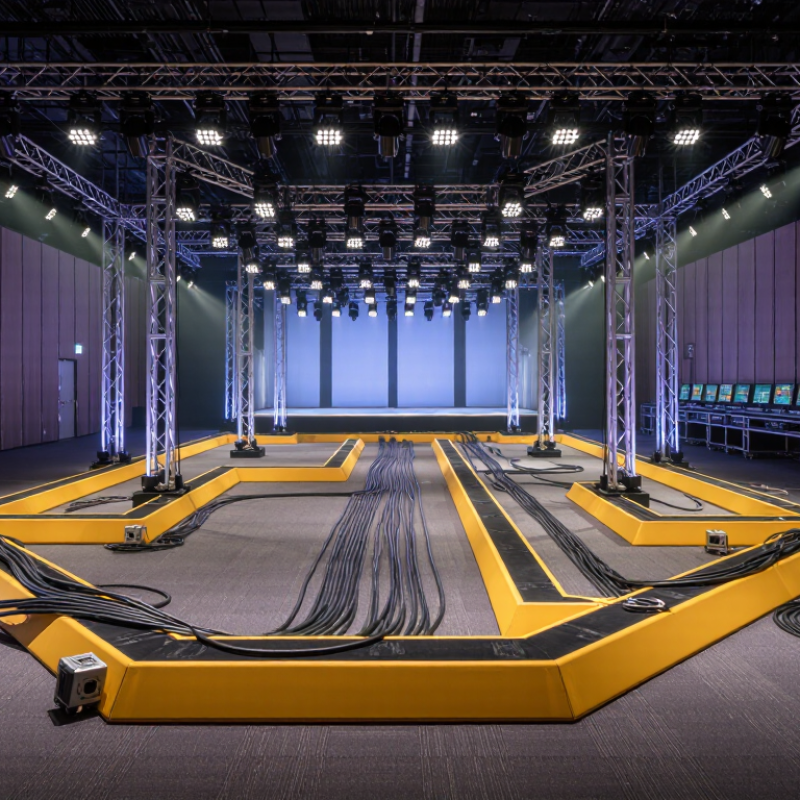
Before unloading fixtures, walk the venue with a floor plan and a phone camera. Note stage edges, audience entrances, fire exits, doors, ramps, and areas where staff will move equipment. Check the ceiling height and identify power outlets; a socket behind a pillar may look useful but create an awkward route. Ask the venue technician about approved cable paths and any floor covers they require. Small details matter.
Mark each lighting position and trace its cable route back to power. Keep runs along walls or behind stage decking where practical, and avoid crossing walkways. If a crossing cannot be avoided, use a suitable cable ramp and make it visible to the crew. Leave enough slack for fixture adjustments, but coil excess cable neatly rather than leaving loops underfoot. Label both ends of each run with the fixture location. Clear labels save time during a dim setup.
Do a slow walk-through at audience eye level. Look for cables that catch light, show beneath drapes, or create a trip point near a doorway. Take a photo of each route before the room fills, then compare it with the actual setup. Plans are rarely perfect; I have overlooked a low handrail that forced a last-minute reroute. Build in time to revise the map, and keep access to exits and equipment areas clear.
Choose cable covers by the route, not just the cable bundle. Measure the full path, including turns and connector bulges. A cover should close without pinching cables, and its capacity should match the actual load. For busy walkways, use a low-profile ramp with a textured, non-slip surface. Measure the full route. A flat fabric sleeve may suit a stage edge, but it will not protect cables from cart wheels or repeated foot traffic.
Match concealment materials to the venue. Matte, dark covers disappear against black flooring, while neutral fabric wraps can blend with drapes or scenic panels. For outdoor setups, select materials rated for the conditions and secure them against wind. Keep connectors accessible, and do not bury warm power supplies under fabric. Check the cover maker’s load and heat guidance; appearance alone is not enough.
I sometimes find that a tidy-looking wrap hides a snag point, so walk the route before doors open. A small gap can still catch a heel.
In event lighting, tidy cable routes are a safety measure, not just a visual improvement. Plan paths before fixtures go up, and keep power and data runs apart where practical. This can reduce interference and makes faults easier to trace. Small details matter. Use cable lengths that reach without pulling connectors tight, but avoid loose coils where people walk.
Run cables along stage edges or behind approved barriers, away from exits and moving equipment. Where a crossing cannot be avoided, use a cable protector suited to the traffic and cable load. Secure overhead runs with supports designed for that purpose; never rely on a connector or a loose tie to hold weight. No tight bends. Check that clamps do not crush insulation, and leave enough slack for safe movement.
Before doors open, inspect plugs, jackets, and connections under working light. Replace damaged cables, and keep connections protected from moisture and spills. Confirm that circuits are not overloaded, and ask a qualified electrician when capacity is uncertain.
I have seen a neat-looking tape job lift at the edge after repeated foot traffic. It is easy to miss. Recheck routes during the event, especially after equipment shifts or a crew member moves a fixture.
How to Hide Messy Wires in Event Lighting Setups in 2026?
Let cable routes follow the room’s lines, not cut across them. Run black cable along dark stage edges, tuck pale sleeves beside light-colored skirting, and align floor runs with scenic seams. The U.S. Bureau of Labor Statistics’ 2023 data, cited in Liberty Mutual’s 2025 Workplace Safety Index, puts same-level falls among costly workplace injury categories. HSE’s 2022/23 report also found slips, trips, and falls accounted for 30% of employee injuries reported under RIDDOR. Concealment should never make a walking route harder to see or navigate.
Tips: Place distribution boxes behind scenic flats, but keep connectors reachable. At unavoidable crossings, use suitable cable ramps. Match cable covers to the floor or stage finish. Leave a little slack at fixtures. Small detail. Still, a perfectly hidden run can be the wrong choice if it blocks a fast equipment check.
Before doors open, inspect cable paths from an attendee’s eye level and from the crew’s working position. A cable that disappears in a photograph may catch a shoe under low light. Secure loose runs, keep exits clear, and avoid piling fabric over warm equipment. If the design changes mid-setup, reassess the route; that’s the step teams can too easily skip.
| Lighting Area | Cable-Path Plan | How to Blend It into the Design | Practical Setup Guidance | Safety and Access Check |
|---|---|---|---|---|
| Stage perimeter | Route cables along the rear or side edge of the stage rather than across the main performance area. | Use existing stage masking, skirted platforms, or dark cable sleeves that coordinate with the stage finish. | Group cables by destination and leave enough service slack for fixtures to be repositioned without pulling on connectors. | Keep cables clear of performer paths, stairs, and stage-edge transitions. Secure loose runs so they cannot shift during the event. |
| Lighting truss and overhead positions | Follow the truss line and use suitable attachment points to support cable runs above the audience. | Keep the cable route parallel to the truss and visually aligned with the rigging layout. | Use cable ties or fasteners intended for the installation, and avoid sharp bends or pinched cables. | Do not use electrical cables as rigging or support lines. Confirm attachment methods and overhead work with qualified crew and venue procedures. |
| Room perimeter | Run cables along walls, behind furniture, or through planned service routes where permitted. | Match sleeves or covers to the floor and wall colors, and keep routes parallel to architectural edges. | Plan the route before placing décor and seating so cables do not need to cross guest circulation areas later. | Do not block exits, fire equipment, door operation, or accessible routes. Check the venue’s requirements before using wall edges or floor channels. |
| Floor crossings | Reroute around a crossing where possible. If a crossing is unavoidable, use a purpose-made cable protector suitable for the location and expected traffic. | Choose a low-profile cover with a color that is visible enough to be noticed while still fitting the event layout. | Lay the protector flat, secure it as directed by its manufacturer, and keep connectors out of pedestrian paths. | Never leave an unprotected cable across a walking route. Inspect the crossing after setup and during the event. |
| Lighting control position | Bundle outgoing runs by fixture group and direct them toward the nearest safe perimeter route. | Use labeled, matching cable wraps and keep the control area visually tidy behind the operator position. | Label both ends of each run so faults or changes can be traced without pulling apart the entire bundle. | Keep ventilation openings, controls, and electrical connections accessible. Avoid tightly bundling cables in a way that could trap heat. |
| Power and signal runs | Plan power and data routes deliberately, following equipment guidance and venue practices for separation and crossing. | Use distinct labels or sleeve colors to make each cable type easy to identify during setup and troubleshooting. | Use cables and connectors appropriate to the equipment and environment; protect connections from moisture and physical damage. | Do not exceed circuit capacity or make improvised connections. Have a qualified person verify power distribution and local electrical requirements. |
| Décor and scenic elements | Place cable routes behind freestanding scenic pieces or within designed service gaps where access remains possible. | Coordinate cable paths with stage flats, drapery, furniture, and sightlines during the design stage. | Make removable access points for connectors that may need adjustment, and avoid trapping cables beneath heavy scenic objects. | Keep cables away from hot fixtures and other heat sources. Do not cover damaged cables or connections with décor. |
| Strike and reuse | Remove cables in a planned order, starting with power isolation and following the event’s shutdown procedure. | Coil and label reusable runs so the next setup begins with organized, identifiable cable groups. | Inspect cables and connectors for visible wear before packing; separate damaged items for assessment. | Disconnect equipment safely and keep the public clear of work areas during teardown. |
Planning note: Cable concealment should never compromise safe access, equipment ventilation, cable inspection, or venue rules. Confirm the final layout with the event technical team and venue staff.
A clean cable route can change once performers, carts, and crew begin moving. Inspect every run before doors open, then repeat checks after equipment changes and during quiet moments in the event. Look for crushed insulation, loose connectors, warm plugs, and cables pulling against lighting stands. A neat-looking run is not automatically a safe one.
The U.S. Bureau of Labor Statistics reported 885 fatal work injuries from falls, slips, and trips in 2023 across all industries. The figure is not specific to event venues, but it underlines why walkways deserve regular attention. Keep cables away from exits and high-traffic paths where possible; secure crossings with suitable cable covers, and replace damaged leads rather than taping over faults. Check that connectors stay dry and strain relief remains intact. Small shifts matter. We can miss them when show pressure builds.
Tips: Assign one crew member to recheck cable paths at each changeover. Use a flashlight behind stage flats and under risers, where connectors can loosen unseen. Record defects and fixes on the venue’s inspection log. A quick check helps, but it cannot replace careful judgment.
Measure the full path, including turns and bulky connectors. Choose a cover that closes without squeezing cables. Check its capacity.
Use a low-profile ramp with a textured, non-slip surface. A fabric sleeve will not stop cart wheels. No shortcuts.
Match dark covers to dark flooring, or pale wraps to nearby skirting. Align runs with scenic seams. A neat look can still hide a snag.
Keep them apart where practical, and route them along stage edges or behind approved barriers. Keep exits clear. Avoid loose coils.
Use a protector suited to the traffic and cable load. Secure it firmly, then check its edges. Small gaps catch heels.
Use supports designed for overhead runs. Never hang cables by their connectors or a loose tie. No tight bends.
Inspect plugs, cable jackets, and connections under working light. Replace damaged cables, protect connections from spills, and confirm circuit capacity. Ask a qualified electrician if uncertain.
Recheck after equipment moves or fixtures shift. View routes from both attendee and crew positions. I still sometimes miss a lifted tape edge, so a second walk-through helps.
How to hide messy wires in professional event lighting setups starts with understanding the venue. Map lighting positions, power sources, walkways, and cable routes before equipment is installed. This helps reduce clutter and keeps cables away from areas where guests, staff, or performers need to move. Choose suitable cable covers and concealment materials for each surface, and plan routes that follow walls, stage edges, or existing design features.
Run power and data cables carefully, keeping them organized and securely fastened without creating tension or obstructing access. Where possible, blend cable paths into the stage and room design using discreet placement and coordinated coverings. Throughout the event, inspect wiring for loose connections, shifted covers, or wear, and correct any issues promptly. A thoughtful setup and regular checks can keep the space tidy, support reliable lighting, and help maintain a safer environment for everyone.

WoodLit Light