Can I leave outdoor motif lights up all year round? The short answer is sometimes, but not without checking their construction, rating, and installation. Outdoor decorations face rain, ultraviolet exposure, wind, dust, and repeated temperature changes. A product that survives December snow may still fade or crack under intense summer sunlight. That difference matters.
The International Energy Agency’s Energy Efficiency 2023 report states that lighting uses roughly 15% of global electricity. Efficient LED motif lights can reduce consumption, but efficiency does not guarantee outdoor durability. The U.S. Department of Energy’s solid-state lighting forecasts also highlight LEDs’ long service potential, while noting that performance depends on operating conditions and product quality. In practical installations, sealed connectors, flexible outdoor-rated cable, and protected power supplies make a visible difference. Small details matter.
Check the manufacturer’s instructions before leaving any display outside. Look for outdoor suitability, weather resistance, and an appropriate IP rating under IEC 60529. UL 588 is also relevant for seasonal and decorative lighting products in the United States. These references support safer decisions, but they do not replace a physical inspection. I have seen seemingly minor cable cuts become serious moisture problems after several storms. That risk is easy to underestimate.
Use a timer or smart controller to limit unnecessary operating hours. Keep lights away from standing water, sharp edges, and heat sources. Inspect plugs, sockets, anchors, and insulation every few weeks. A careful maintenance plan may extend the display’s life, although no outdoor product lasts forever. Sometimes, taking the lights down is the wiser choice.
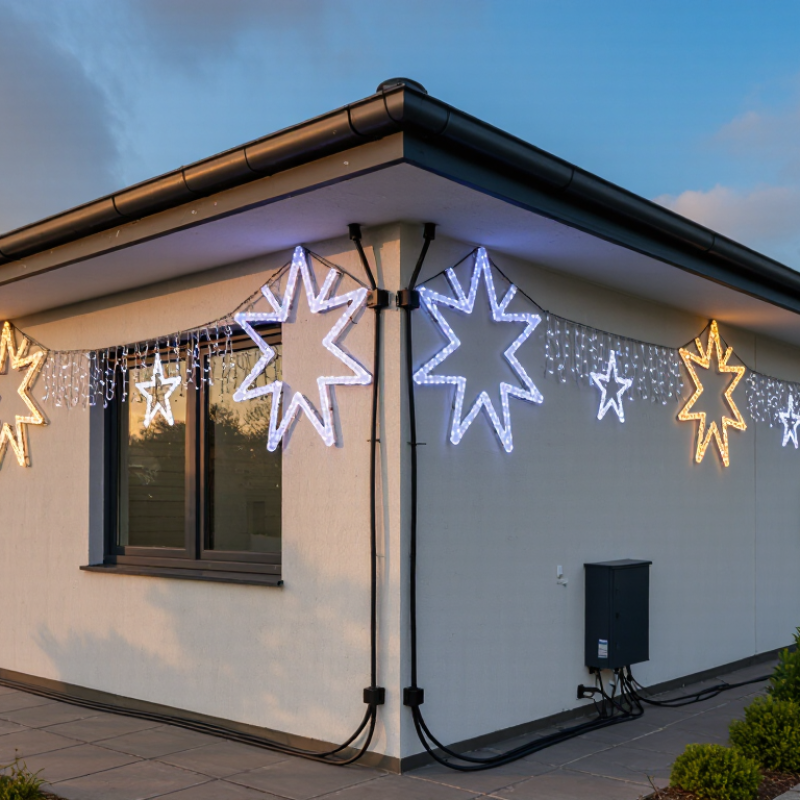
Outdoor motif lights are decorative fixtures shaped like stars, snowflakes, trees, or custom seasonal figures. Unlike indoor decorations, they face rain, sunlight, wind, dust, and repeated temperature changes. Weather changes quickly. A suitable outdoor rating, such as IP65 or higher, helps protect against dust and water jets, but it does not make every installation permanent.
Year-round performance starts with the frame and wiring. Choose corrosion-resistant metal, sealed connectors, UV-resistant cables, and stable mounting points. Inspect the light before each season for cracked insulation, loose clips, faded covers, or water inside the housing. Check the connections. Keep plugs above standing water, and use outdoor-rated timers and protection devices installed according to local electrical requirements. Strong wind can turn a decorative panel into a sail, so anchors should match the wall, roof edge, or ground surface.
Cleaning also affects brightness and service life. Wipe away dust with a soft, slightly damp cloth, then allow the fixture to dry fully. Avoid harsh chemicals, pressure washing, and tightly bending cold cables. I once stored a light while its frame was still damp; small rust spots appeared the following month. That mistake matters. During freezing weather, flexible parts may become brittle, while summer heat can loosen adhesive mounts. A sheltered storage box, dry packing material, and a monthly visual check reduce these risks, although no maintenance plan is perfect. Recheck the installation after heavy rain or strong winds.
| Maintenance Dimension | Year-Round Requirement | Recommended Frequency | Practical Check | Seasonal Consideration |
|---|---|---|---|---|
| Ingress Protection | Use fixtures and connectors rated for outdoor exposure. A higher IP rating provides stronger protection against dust and water. | Verify before installation and inspect annually. | Check that seals, cable glands, and enclosures are intact and firmly closed. | Heavy rain, snow, and freeze-thaw cycles can expose weak seals. |
| Electrical Safety | Connect outdoor lighting to a circuit protected by a ground-fault circuit interrupter (GFCI), where required by local electrical regulations. | Test the protective device monthly or according to its instructions. | Use the test and reset controls, and stop using the system if protection does not operate correctly. | Moisture and damaged insulation can increase the risk of nuisance trips. |
| Cable and Connector Care | Keep cables elevated or routed away from standing water, sharp edges, traffic areas, and lawn equipment. | Inspect every 1–3 months and after severe weather. | Look for cuts, crushed sections, loose plugs, exposed conductors, or discolored connectors. | Snow removal, strong winds, and gardening work can displace or damage wiring. |
| Mounting and Structural Stability | Secure motifs with weather-resistant fasteners and avoid overstressing frames, branches, poles, or building surfaces. | Inspect quarterly and after high winds. | Check for leaning supports, loose clips, cracked frames, and cable tension. | Wind and ice loading can increase mechanical stress during winter. |
| Cleaning and Light Output | Remove dirt, leaves, salt deposits, and insect buildup so lenses and diffusers remain clear. | Every 3–6 months or when brightness visibly decreases. | Switch off power, allow the fixture to cool, then clean with a soft damp cloth. | Pollen, dust, coastal salt, and fallen leaves may require more frequent cleaning. |
| Temperature and Ventilation | Operate the light within the temperature range specified by the manufacturer and keep ventilation openings unobstructed. | Review before extreme hot or cold periods. | Check for heat discoloration, blocked vents, brittle plastic, or condensation inside the enclosure. | High heat can shorten electronic component life; freezing conditions can make materials brittle. |
| Moisture and Condensation | Prevent water from collecting around sockets, junctions, transformers, and cable entry points. | Inspect after rain, thawing snow, or washing. | Power down immediately if water is visible inside a sealed component; replace damaged parts rather than opening sealed units. | Rapid temperature changes can create condensation in poorly sealed housings. |
| Timers and Controls | Use weather-suitable timers, photocells, or control systems and adjust schedules as daylight hours change. | Review monthly and when daylight patterns change significantly. | Confirm automatic switching, timer accuracy, and secure control-box covers. | Winter darkness may require longer operating periods than summer. |
| LED and Lamp Replacement | Replace failed lamps, drivers, or modules with compatible parts having the correct voltage, wattage, and environmental rating. | As needed, with a full annual review. | Turn off and isolate power before replacement; do not bypass protective components. | Cold weather may reveal weak batteries, drivers, or brittle lamp holders. |
| Annual Professional Review | Have a qualified electrician assess persistent faults, repeated GFCI trips, damaged wiring, or hardwired installations. | At least once a year or whenever a safety concern appears. | Request checks of insulation, grounding, connections, controls, and mounting points. | Schedule the review before the season with the most severe local weather. |
Safety note: Always follow the product instructions and local electrical codes. Disconnect power before cleaning, moving, or servicing outdoor motif lights.
They are decorative fixtures shaped like stars, snowflakes, trees, or seasonal figures. They need protection from rain, sunlight, wind, dust, and temperature changes.
IP65 helps resist dust and water jets. It does not guarantee permanent performance in every location or climate. Inspect the fixture regularly.
Choose corrosion-resistant metal, sealed connectors, UV-resistant cables, and stable mounting points. Avoid exposed wiring and weak adhesive mounts.
Check them before each season and after heavy rain or strong winds. A three-month inspection schedule is practical. Look for cracked insulation, loose clips, fading, and water inside housings.
Turn off power before touching anything. Check for loose wires, corroded sockets, cracked lenses, and moisture. Replacing one visible bulb may hide deeper corrosion.
Replace worn seals, connectors, fuses, and cable sections promptly. A replacement driver must match the original voltage, wattage, and outdoor protection requirements. Check the specifications carefully.
Wipe the surface with a soft, slightly damp cloth. Let it dry completely before storage or operation. Avoid harsh chemicals, abrasive cleaners, and pressure washing.
Store them in a dry, sheltered box with dry packing material. Do not tightly bend cold cables. I once stored a damp frame, and rust appeared later. That mistake matters.
Strong wind can make a decorative panel act like a sail. Match anchors to the wall, roof edge, or ground surface. Repeated damage may indicate water pooling or excessive cable tension.
Regular maintenance reduces risks but cannot prevent every failure. Freezing weather can make flexible parts brittle, while summer heat may loosen adhesive mounts. Small details matter.
Can I leave outdoor motif lights up all year round? Yes, provided they are specifically designed for outdoor use and maintained properly. Choose lights with weather-resistant housings, sealed connections, UV protection, and durable cables that can withstand rain, sunlight, wind, and temperature changes. During installation, secure every section firmly, keep wiring away from standing water and sharp edges, and use suitable outdoor-rated power connections. Proper placement also helps prevent damage from seasonal storms, snow, or strong sunlight.
Year-round care is essential for reliable performance. Clean away dust, leaves, moisture, and other debris, then regularly inspect bulbs, sockets, cables, fasteners, and controllers for cracks, corrosion, loose parts, or water intrusion. Address flickering, dim sections, and intermittent power promptly by checking connections and replacing only worn or damaged components with compatible outdoor-rated parts. When severe weather is expected, add extra support or temporarily remove vulnerable sections to extend the lights’ service life and maintain safe operation.

 WoodLit Light