Why Switch from Traditional Bulbs to LED Motifs?

Time:2026-10-22 Author:Charlotte
0%

Traditional bulbs create warmth, but they often waste energy and require frequent replacement. LED motifs offer a more efficient, flexible alternative for homes, events, retail displays, and hospitality spaces. They can shape a doorway with soft amber points, outline a storefront with crisp white light, or add color without excessive heat.

Learning How to transition from traditional bulbs to LED motifs requires more than replacing one bulb with another. Wattage, color temperature, dimming compatibility, weather resistance, and spacing all affect the final result. A 2700K LED can preserve the familiar golden glow of incandescent lighting. A 4000K option may appear cleaner, but it can feel harsh in a dining area. Small details matter.

Lighting designer Randall Whitehead is widely associated with the practical principle, “Lighting should be layered.” That idea applies well here. Combine ambient light, accent motifs, and task lighting instead of relying on one bright source. Test a short section before installing the entire design. It may look different at night.

LEDs usually reduce electricity use and maintenance demands. However, cheaper products can suffer from flicker, uneven color, or weak outdoor sealing. This is where professional judgment matters. Check certification marks, warranty terms, and driver quality. Do not assume every LED product performs equally.

The transition is not perfect. Some traditional bulbs still produce a distinctive glow that LEDs imitate imperfectly. Yet, with careful selection and testing, LED motifs can deliver strong visual character with less heat, waste, and replacement work.
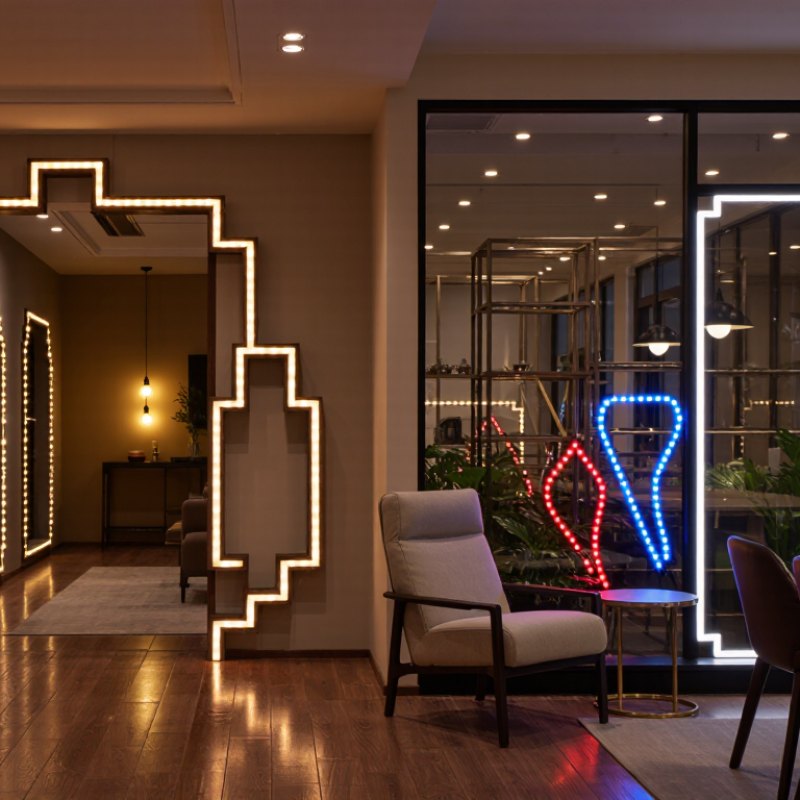
Why Switch from Traditional Bulbs to LED Motifs?

How Traditional Bulbs and LED Motifs Differ

Traditional bulbs and LED motifs create very different lighting experiences.
A traditional incandescent bulb produces light by heating a wire, so much of its energy becomes heat. In a decorative display, the glass can feel hot after extended use. LED motifs generate light through semiconductors, producing less surface heat and using power more efficiently.
The U.S. Department of Energy reports that residential LEDs use at least 75% less energy than incandescent bulbs.
They can also last up to 25 times longer.

The visual difference is equally important.
Traditional bulbs often provide a warm, familiar glow from a single bright filament. LED motifs can use many small light points, allowing sharper outlines, animated patterns, and more flexible shapes. They also respond well to dimming and low-voltage controls, although compatibility still requires checking.
ENERGY STAR testing emphasizes lumen output, color temperature, and estimated annual energy use rather than wattage alone.
This matters when replacing a 60-watt bulb with a lower-watt LED product.

LEDs are not automatically perfect.
Some inexpensive units show uneven brightness, visible flicker, or weak color rendering. That detail is easy to miss in a showroom.
For outdoor motifs, installers should check weather resistance, cable protection, and operating temperature. A 2023 U.S. Department of Energy solid-state lighting report also notes continuing progress in efficacy and connected controls. Still, electronic drivers may fail before the diodes. Repair and recycling can be inconvenient.
That deserves more attention.

How LED Motifs Improve Energy Efficiency

Why Switch from Traditional Bulbs to LED Motifs?

How LED Motifs Improve Energy Efficiency

Switching from traditional bulbs to LED motifs changes more than appearance. In my experience, decorative lighting often stays on for hours during gatherings or seasonal displays. A 4-watt LED motif can produce a similar visual effect to a 25-watt incandescent bulb. The lower power demand becomes noticeable on a long electricity bill. Less heat also escapes into the room. That matters in warm spaces.

LEDs convert more electricity into visible light instead of heat. A simple plug-in energy meter can verify this difference at home. It can also reveal unexpected waste from timers, adapters, or displays left running overnight. Using a timer prevents unnecessary operating hours. Dimming controls can reduce consumption further, when the lighting system supports them. Small adjustments help.

Still, efficiency is not automatic. Poor placement may require extra motifs, cancelling some savings. Very cheap units may fail early, creating replacement waste. I have also seen people choose excessive brightness for a small room. That decision feels efficient only on paper. Check the wattage, rated lifespan, heat buildup, and control compatibility before installation. A cooler fixture is not always a better fixture. Disposal also deserves attention, since electronic components should follow local recycling guidance.

Based on representative 800-lumen lighting: a 60-watt traditional incandescent bulb uses 60 kWh after 1,000 operating hours, while a 10-watt LED motif uses 10 kWh. This represents approximately 83% lower electricity consumption for the LED option.

How LED Motifs Reduce Long-Term Lighting Costs

Why Switch from Traditional Bulbs to LED Motifs?

Traditional bulbs can make decorative displays expensive to operate. Their filaments release much energy as heat. LED motifs use light-emitting diodes, which need less electricity for similar brightness. The U.S. Department of Energy reports that LEDs use at least 75% less energy than incandescent lighting. It also reports lifespans up to 25 times longer. For a display operating six hours nightly, this difference becomes visible on monthly utility bills.

Long-term savings also come from fewer replacements and safer maintenance routines. A traditional bulb may fail during a busy event, requiring ladders, spare parts, and staff time. LEDs usually produce less heat, which can reduce stress on nearby materials. The International Energy Agency identifies lighting as a major share of global electricity demand. However, actual savings depend on operating hours, electricity rates, brightness settings, and installation quality. The purchase price remains higher sometimes. That part deserves honest attention.

Tips: Compare total ownership cost, not only shelf price. Record the wattage, daily runtime, and local electricity rate. Choose sealed, weather-resistant motifs for outdoor displays. Test one section before replacing everything. Poor wiring can erase expected savings. Dimming may reduce consumption further, but only compatible controls should be used. A small energy meter can reveal whether estimates match real usage. My experience is that maintenance savings are easy to overlook, yet they often shape the final budget.

How LED Motifs Enhance Safety and Design Flexibility

Why Switch from Traditional Bulbs to LED Motifs?

LED motifs improve safety while opening more creative possibilities. The U.S. Department of Energy reports that LEDs use at least 75% less energy than incandescent bulbs. They also last up to 25 times longer. Lower energy demand can reduce replacement frequency and electrical load. LEDs usually produce less forward heat, which helps near paper, fabric, and painted surfaces. Still, the driver can become hot. Proper ventilation remains essential.

The design options are broader, too. The 2023 U.S. Department of Energy Solid-State Lighting R&D Opportunities report highlights controllability, color tuning, and improved optical performance. These features support glowing borders, layered patterns, animated signs, and soft architectural accents. Dimming can shift a motif from bright task lighting to a calm evening display. Color temperature can also change the atmosphere without replacing the fixture. Small spaces benefit greatly.

I have found installation details matter more than expected. A poorly positioned power supply can weaken an otherwise strong design. Moisture exposure needs careful product selection and protection. Certified components, secure wiring, and tested mounting methods should guide every project. The weak point is often planning. LEDs offer flexibility, but too many colors or effects can make a space feel visually noisy. Simpler patterns sometimes communicate better.

Why Switch from Traditional Bulbs to LED Motifs? - How LED Motifs Enhance Safety and Design Flexibility
Performance and Design Dimension Traditional Incandescent Bulbs LED Motifs Practical Benefit
Typical Power Consumption About 40–100 watts for common decorative bulbs, depending on brightness. About 3–15 watts for a comparable decorative LED motif or light set. LED motifs can provide similar visible brightness with substantially lower electrical demand.
Luminous Efficacy Typically around 10–17 lumens per watt. Typically around 80–120 lumens per watt for modern decorative LED products. Higher efficacy reduces operating energy while preserving brightness and visual impact.
Expected Service Life Approximately 750–2,000 operating hours. Commonly approximately 15,000–25,000 operating hours, depending on construction, temperature, and operating conditions. Longer service life can reduce replacement frequency, ladder work, maintenance time, and installation disruption.
Heat and Contact Safety The glass envelope and nearby fittings can become very hot during operation, creating a burn and heat-damage risk. LEDs generate heat but generally operate with a much cooler light-emitting surface; drivers and heat sinks may still become warm. Lower surface temperatures are better suited to fabric, paper, foliage, display materials, and crowded decorative installations when ventilation requirements are followed.
Electrical Safety Options Many traditional decorative bulbs operate directly at mains voltage. Available in mains-voltage versions and extra-low-voltage systems, including products designed around 12 V or 24 V supplies. Correctly installed extra-low-voltage systems can reduce shock risk in suitable indoor, outdoor, event, and public-display applications.
Switching and Dimming Instant start and generally straightforward dimming with compatible traditional dimmers. Instant start is typical, but dimming depends on the LED driver, dimmer, wiring, and product specifications. LED motifs support frequent switching and programmable effects, but compatibility should be verified before installation.
Colour and Visual Effects Warm white light is common, with limited colour-changing capability and fewer integrated effects. Available in warm white, neutral white, cool white, single-colour, multicolour, colour-changing, flashing, and chasing configurations. Designers can create layered, animated, seasonal, architectural, or themed displays without changing the basic motif structure.
Form Factor and Design Flexibility Bulb size, filament position, socket layout, and heat output limit placement and shape options. LEDs can be arranged in flexible strings, panels, strips, compact modules, outlined figures, mesh displays, and custom-shaped motifs. Smaller light sources and flexible wiring make it easier to follow curves, edges, lettering, trees, façades, and irregular surfaces.
Outdoor Protection Outdoor use often requires additional weather protection and suitable enclosed fixtures. Outdoor LED motifs are available with enclosure ratings such as IP44, IP65, or higher, provided the complete product and connections meet the required rating. Weather-rated construction can improve reliability in rain, dust, and temporary outdoor installations; the specified IP rating must match the environment.
Colour Rendering Incandescent light commonly offers a colour rendering index close to 100, with a warm colour appearance. Decorative LEDs vary widely; many products are available with CRI values from approximately 80 to above 90. Choosing a suitable colour temperature and CRI helps preserve the appearance of fabrics, merchandise, artwork, food, and architectural materials.
Energy and Operating Cost Higher wattage increases electricity use and operating cost over long display periods. Lower wattage generally reduces electricity consumption for the same operating schedule and comparable light output. LED motifs are particularly advantageous for displays that operate for extended hours or throughout a full season.
Maintenance and Replacement Frequent bulb replacement may be required, especially in installations that are switched often or exposed to vibration. Long-life LED modules and sealed designs can reduce routine replacement, although an integrated LED unit may require replacing the complete module or fitting if it fails. Maintenance planning should consider whether the product uses replaceable lamps, replaceable modules, or an integrated construction.
Environmental Considerations Uses more electricity during operation and typically has a shorter service life; the glass and metal components may be recoverable through suitable waste channels. Uses less operating energy and generally lasts longer, but includes electronic components that should be handled through appropriate electrical-waste recycling systems. Lifecycle performance depends on energy use, service life, repairability, responsible disposal, and the quality of the installation.
Note: Values are typical industry ranges rather than guarantees. Actual performance depends on product construction, installation, ambient temperature, power quality, control equipment, duty cycle, and compliance with applicable electrical and fire-safety requirements.

How to Choose and Install the Right LED Motifs

Choosing LED motifs starts with the display location. Measure the wall, window, or garden edge before ordering. Note the available voltage and total wattage. Select warm white for a soft, welcoming scene. Cool white suits crisp outlines. For outdoor use, choose weather-resistant construction with an appropriate IP rating. Check cable length and spacing too. A beautiful motif becomes awkward when its lead stops near the last hook. Small details matter.

During installation, test every section on a dry floor. Look for flicker, loose connectors, or dark sections. Mount with clips designed for the surface, not improvised metal staples. Keep adapters elevated from puddles and protect connections from direct rain. Indoors, leave slight slack around corners. Tight bends can stress wires and distort the shape. My first display looked uneven because I measured the frame, not the cable path. I had to remount it.

Follow the supplied voltage instructions exactly, especially when connecting multiple motifs. Never exceed the adapter’s rated load. Turn off power before changing a connector or moving a support. A residual-current device can add protection in damp areas, but it cannot replace correct wiring. If the circuit needs modification, use a qualified electrician. After installation, inspect the motif weekly for heat, damage, or water entry. LEDs use less energy, but careless placement still creates waste and maintenance work.

FAQS

How do LED motifs differ from traditional bulbs?

Traditional bulbs heat a wire, so much energy becomes heat. LED motifs use semiconductors and usually stay cooler. They can use at least 75% less energy and last up to 25 times longer. The glow feels different.

Are LED motifs safer near fabric or paper?

They usually create less surface heat, which helps near paper, fabric, and painted surfaces. However, the power supply can still become hot. Keep it ventilated and away from enclosed spaces. Cooler does not mean risk-free.

What visual effects can LED motifs create?

Many small light points can form sharp outlines, layered patterns, and animated shapes. Dimming can change a bright display into a calm evening accent. Color tuning also changes the atmosphere. Too many effects may look noisy.

How should I choose a motif for indoor or outdoor use?

Measure the wall, window, or garden edge before ordering. Check voltage, total wattage, cable length, and light spacing. Outdoor displays need weather-resistant construction and a suitable protection rating. A short lead can ruin a good layout.

Which light color suits different spaces?

Warm white creates a soft, welcoming scene. Cool white gives clearer borders and a crisper appearance. Choose based on the surface and mood. I sometimes choose color before measuring, and that order causes problems.

How can I install LED motifs safely?

Test every section on a dry floor before mounting. Use suitable clips instead of improvised metal staples. Keep adapters above puddles and shield connections from direct rain. Turn off power before moving connectors.

Can I connect several LED motifs together?

Follow the supplied voltage instructions exactly. Never exceed the adapter’s rated load. Check compatibility before using dimmers or low-voltage controls. If wiring needs modification, use a qualified electrician.

What problems should I inspect after installation?

Check weekly for heat, damaged cables, water entry, loose connectors, or dark sections. Watch for flicker and uneven brightness. Electronic drivers may fail before the light points. Repair can be inconvenient, so planning matters.

Conclusion

Traditional bulbs and LED motifs differ significantly in technology, performance, and versatility. Traditional bulbs usually consume more electricity, produce greater heat, and have shorter lifespans, while LED motifs use energy-efficient light-emitting diodes that provide bright, consistent illumination with less power. Their lower energy consumption and longer service life can reduce replacement frequency, maintenance needs, and long-term lighting costs. LEDs also operate at cooler temperatures, helping improve safety in homes, workplaces, and decorative settings.

LED motifs offer greater design flexibility through varied shapes, colors, brightness levels, and installation options, making them suitable for both functional and creative lighting projects. Understanding how to transition from traditional bulbs to LED motifs can help users select the right color temperature, wattage, size, and compatibility for their space. Proper installation includes checking fixtures, ensuring secure connections, following electrical safety guidance, and positioning the motifs to achieve balanced illumination. With thoughtful planning, switching to LED motifs can create a safer, more attractive, and more economical lighting environment.

Charlotte

Charlotte

Charlotte is a seasoned marketing professional with a deep understanding of the company's portfolio and a passion for elevating its presence in the market. With a keen eye for detail and a commitment to excellence, she ensures that our professional blog is regularly updated with insightful articles......